
2026-10-08 · Marco Ramirez
Ant Infestations in Miami: Identifying and Eliminating Common Species
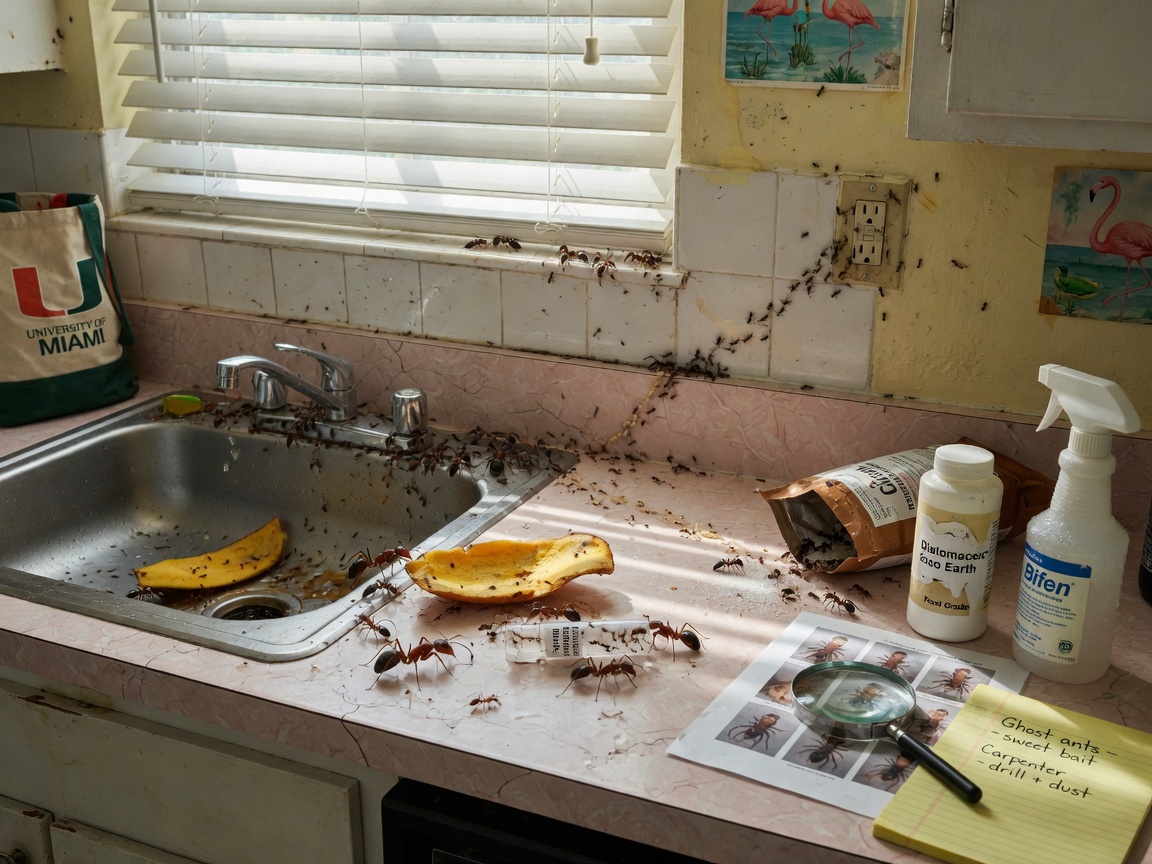
Ant infestations in Miami are a year-round challenge, driven by our tropical monsoon climate with its hot, wet summers that create ideal breeding conditions for various species. While there isn't a single "magic bullet" to eliminate all ants, successful control hinges on accurately identifying the specific species, understanding its habits, and applying targeted strategies. From the tiny ghost ants that seem to materialize out of nowhere in your kitchen to the aggressive fire ants that can make enjoying your backyard in Coconut Grove a painful experience, each type requires a different approach. Effective elimination involves a combination of sanitation, exclusion, and precise baiting or treatment, often requiring the expertise of a local pest control professional who understands the unique pressures of Miami-Dade County's environment.
Common Ant Species in Miami-Dade County
Miami's unique climate and urban landscape support a diverse array of ant species, each with its own characteristics and preferred nesting sites. Knowing which ant you're battling is crucial for effective treatment. The most frequently encountered species in areas like Downtown Miami, Brickell, and the older homes of Coral Gables include the ghost ant, big-headed ant, white-footed ant, and the notorious fire ant. These ants are not just a nuisance; some can cause structural damage or deliver painful stings. For instance, the ghost ant (Tapinoma melanocephalum) is tiny, about 1.5 mm long, with a dark head and thorax and pale, translucent legs and abdomen, making them incredibly hard to spot until they're marching across your kitchen counter in large numbers. They thrive in high humidity, often nesting indoors in wall voids or behind baseboards, particularly in the older, less sealed structures common in areas like Little Havana. Understanding these distinctions is the first step in formulating an effective pest control strategy.
Identifying Ant Trails and Nests
One of the most telling signs of an ant problem is the presence of a foraging trail. Ants lay down pheromone trails to guide their nest-mates to food and water sources. Observing these trails can provide vital clues about the species and the location of their colony. For example, if you see ants marching in a distinct line towards a food source in your Wynwood loft, it's likely a different species than if you find scattered ants exploring your patio in Coconut Grove. Nests can be incredibly varied: some ants, like the big-headed ant, build nests with visible soil mounds, often found along sidewalks or foundations in places like the Design District. Others, such as the white-footed ant, prefer to nest in dark, moist areas like attics, wall voids, or even within decaying wood, which is common in many of Miami's older residential properties. Indoors, look for small piles of sawdust-like material (frass) near wood, which could indicate a carpenter ant nest, though these are less common here than in cooler climates. Pinpointing these nests is key to eliminating the colony, not just the foraging workers. For more information on dealing with ants specifically inside your home, you can visit our page on [/services/ants-in-house].
Effective Elimination Strategies for Miami Ants
Eliminating ants effectively in Miami requires a multi-faceted approach, moving beyond simply spraying visible ants. Since many species, like the ghost ant, have multiple queens and satellite colonies, merely killing the foraging workers will not solve the underlying problem. Baiting is often the most effective method, as ants carry the bait back to the colony, ultimately eliminating the queen and the entire nest. However, the type of bait (gel, granular, liquid) and its active ingredient must be carefully chosen to match the ant species and its nutritional needs. For outdoor nests, particularly those of fire ants, broadcast granular baits can be highly effective across larger areas, such as a backyard in Coral Gables. For indoor issues, gel baits placed strategically along ant trails or near entry points are usually preferred. Beyond chemical treatments, exclusion is critical: sealing cracks and crevices in foundations, around windows, and utility penetrations prevents new colonies from establishing themselves. This is especially important in older Miami homes that might have more vulnerabilities.
The Importance of Professional Pest Control in Miami
While DIY solutions might offer temporary relief, the persistent nature of ant infestations in Miami's climate often necessitates professional intervention. Our tropical monsoon climate means ants are constantly seeking refuge and resources, especially during the hot, wet summers. A professional pest exterminator understands the specific behavioral patterns of local ant species and has access to more effective, targeted treatments that are not available to the general public. For example, correctly identifying a white-footed ant infestation, which can have massive colonies with millions of individuals and multiple queens, requires a different strategy than dealing with a smaller ghost ant colony. Professionals can also identify and address contributing factors, such as excessive moisture or overgrown vegetation, that attract ants to your property. If you're seeing ants consistently in your kitchen, you might benefit from specialized services like those detailed on our [/services/ants-in-kitchen] page. Our team at Florida Pest Guard serves all of Miami-Dade County, from the bustling streets of Brickell to the quiet neighborhoods of Coconut Grove, providing tailored solutions.
Preventing Future Ant Infestations
Prevention is paramount to keeping ants out of your Miami home or business. Given our year-round warm temperatures, ants are always active. Simple steps can significantly reduce their appeal to your property. Firstly, maintain impeccable sanitation: clean up food spills immediately, store food in airtight containers, and regularly empty trash cans. Secondly, address moisture issues, as many ants are attracted to water; fix leaky pipes, ensure proper drainage around your foundation, and keep gutters clear. Thirdly, seal entry points: caulk cracks in foundations, around windows and doors, and ensure screens are in good repair. Trim back tree branches and shrubs that touch your home, creating 'bridges' for ants to access your property from the landscape. Regular outdoor perimeter treatments can also create a protective barrier, deterring ants before they ever become an indoor problem. By being proactive, you can make your property less inviting to these persistent pests. For comprehensive pest management, consider our full range of [/services/residential-pest-control] options.
Understanding the specific ant species and employing targeted strategies are key to effectively managing ant infestations in Miami. With our tropical climate, professional pest control is often the most reliable solution for long-term relief. Florida Pest Guard is here to help Miami residents and businesses, operating Mon–Fri 8am–6pm and Sat 9am–2pm to address your pest concerns.